 beckon
Coding agents, in practice
Every Beckon episode, written up: what we cover, the key moments with timestamps, and how to run it yourself.
-

Claude Code Sub-Agent Model Routing: Opus, Sonnet and Haiku Tested
In my three-round test, a roster of Opus 5.5 planning, Sonnet 5.5 building and Haiku 5.5 scanning passed the same 56 hidden tests as Opus 5.5 on every job and cost 34% less at API prices. Keep your best model on planning and review, and hand lookups and clear builds to smaller models.
-

Gemini 4 Neon vs Claude Sonnet 5.5: Coding Agent Test Results
In my four coding tests inside Claude Code, Gemini 4 Neon and Claude Sonnet 5.5 came out almost tied on quality. Sonnet was faster on three of four (35.3 minutes total versus 50.5), and Neon's bill was more than twice Sonnet's API-equivalent cost.
-

Claude Code Context Rot Test: Opus 5.5 and Sonnet 5.5 at 840K Tokens
In my test, a Claude Code session filled to about 840K tokens did not make Opus 5.5 or Sonnet 5.5 worse: Opus fixed 14 of 16 bugs fresh and at 840K. It took about 14 times the tokens, more than 6 times the API-equivalent cost, and 4 of 10 runs that started at 850K ran out of room.
-
Vague Prompts in Claude Code: Opus 5.5 vs Sonnet 5.5 Over 10 Rounds
Over 10 rounds of "make it better" in Claude Code, the original 20 tests passed every round for both models, yet Opus 5.5 changed 12 of 19 untested behaviors and Sonnet 5.5 changed 6. Given one failing test instead, both finished in under a minute.
-

Best Cheap AI Coding Model: Haiku 5.5 vs MiniMax vs Particle-1
Particle-1 passed all four coding tests at the lowest cost per passing task. Haiku 5.5 also passed all four and was the fastest by a wide margin, but it cost the most. MiniMax M3.1 Flash passed three of four after running out of time on the 3D tour.
-

Open Code Review, FastMCP, ffmpeg-skill: 5 Repos for Coding Agents
Five trending GitHub repos that each give a coding agent a new job: FastMCP (tool maker), Stitch Skills (designer), last30days (researcher), ffmpeg-skill (video editor) and Alibaba's Open Code Review (code reviewer). I'd install Open Code Review first, in delegation mode, since it needs no new key.
-

Grep vs Embeddings: How Coding Agents Search Your Code
On Excalidraw, an agent with grep and an agent with embeddings both scored 23/24. On a repo the model had never seen, grep scored 17/18 and embeddings 16/18. What mattered most was the model rewriting the question into code words, so name the function, paste the error and mention the folder.
-
Claude Code vs Codex with the Same Model: Sonnet 5.5 Tested
With the same model (Claude Sonnet 5.5) and the same prompts, Claude Code and Codex scored almost the same on four tests. Claude Code was faster on three of four and cheaper overall, while Codex fixed one more bug by letting the model think about 7.5x more.
-

gstack, Modern Web Guidance, OpenSandbox: 5 Coding Agent Repos
I count down five GitHub repos trending for people who run coding agents: NVIDIA SkillEvaluator, OpenAI Codex Security, OpenSandbox, Chrome's Modern Web Guidance and Garry Tan's gstack. The one I'd install first is Modern Web Guidance: one command, no account, tiny, and they show their numbers.
-

Claude Code Compaction: What /compact Keeps and What It Forgets
In my test, Claude Code kept everything I typed through compaction (20 out of 20 in all six runs) but lost much of what the agent worked out itself (9, 15 and 10 out of 20 with a plain /compact). A focus line, CLAUDE.md and the on-disk transcript bring most of it back.
-

Structured Outputs vs JSON Mode: How Constrained Decoding Works
Strict structured outputs don't make the model listen better. Your schema is compiled into a grammar, and before every token a mask blocks anything that would break it. In my 900-call test strict mode produced zero wrong-shape replies, but it can't fix cut-off replies or made-up values.
-

Claude Code Prompt Caching: On vs Off, Same Job, 4x the Cost
With prompt caching off, the same Claude Code job on Sonnet 5.5 cost about 4.2x more at Anthropic's list prices, while fixing the exact same 14 of 16 bugs. Caching works because agents resend the whole conversation every turn. Keep stable content first, append only, and don't switch models or tools mid-session.
-

GPT Image 2.6 Flare vs Sunburst vs 2.5: Blind Test Results
In my blind test, quality across GPT Image 2.6 Flare, 2.6 Sunburst and 2.5 Sunburst came out close to a three-way tie. Flare was about 4.5x faster than 2.5, and 2.6 Sunburst was the only model to get all five chained edits right. I'd switch: Flare for volume, Sunburst for edits.
-
Claude Code Sub-Agents vs One Agent: Tested on Real Coding Jobs
In my test, a lead plus four sub-agents finished a bug hunt about 12% faster than one Claude agent, but both fixed the same 28 planted bugs and the team used about 2.3x the tokens. On a one-file job everyone scored 12/12 and the team used over 5x the tokens. Split work only when the parts are independent and mostly reading.
-
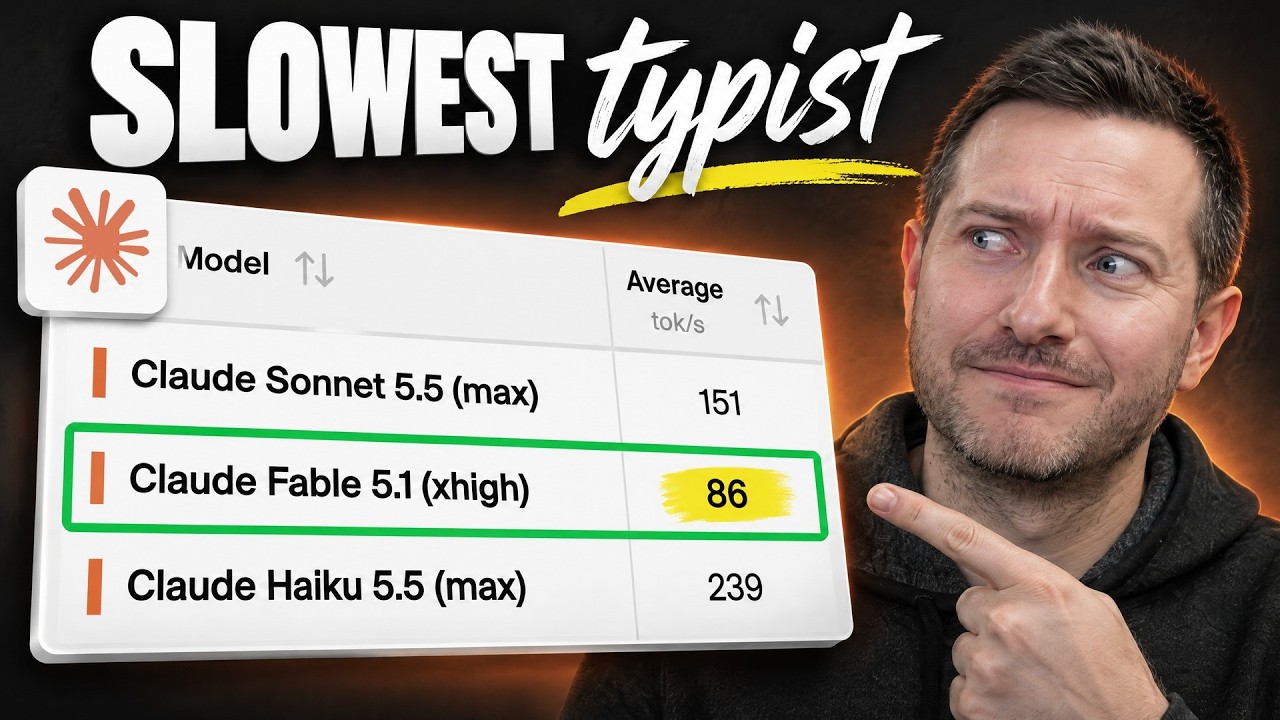
Haiku 5.5 vs Sonnet 5.5 vs Fable 5.1 in Claude Code: 4 Coding Tests
Across 4 coding jobs in Claude Code, Haiku 5.5 at max usually reached passing tests first, Fable 5.1 at xhigh finished fastest on the bug hunt, and Sonnet 5.5 at max scored highest on bugs but finished last in all 8 timed runs because it kept working long after the tests passed.
-

Claude Code Effort Levels Tested: Medium vs High vs Xhigh vs Max
On a 16 bug codebase, Opus 5.5 in Claude Code fixed 14 bugs at medium, high and xhigh, and 16 only at max, which took about 13 times longer than medium. Medium (the default) suits everyday work; max is worth it for order-dependent bugs like race conditions.
-

Coding Agent Benchmarks Explained: SWE-bench, Terminal-Bench, pass@k
The same model can post very different coding scores because each number depends on the benchmark version, how many tries it got, the harness (agent, tools, time limit, effort), who ran it, and whether the test leaked into training data. Check all five before trusting a launch chart.
-

How to Build Scroll-Driven Video Websites with Claude Code
Scroll World is a Claude Code skill that turns a chain of short pre-rendered video clips into a homepage you fly through as you scroll. It doesn't use a 3D engine or WebGL. I used it to build nightcrew.studio and heybeckon.ai, and I cover the seven steps, the playbook files and where it breaks.
-

Claude Tool Calls Explained: Who Runs Them and How Claude Code Loops
An agent is a model calling tools in a loop: the app sends the conversation, the model answers or requests a tool, the app runs it and sends the result back, and the loop continues while stop_reason is tool_use. In my Claude Code run that took 14 requests and 16 tool calls, and the tools only ran for about 4 of the 120 seconds.
-

Running GLM-5.3 in Claude Code: Open Model vs Sonnet 5.5
Inside the same Claude Code harness, GLM-5.3 matched Sonnet 5.5 at 8/8 tests on a scoped CSV export ticket in every run, in less than a third of the time. On a 16-bug codebase, Sonnet fixed 15 and GLM fixed 9. Most of what GLM missed were race and timing bugs.
-

MCP vs CLI for Coding Agents: Context Cost, Security and When to Use Each
If a tool has a good CLI (git, gh, npm, docker), start there: your agent already has a shell and only reads help text when it needs it. Use MCP when there's no CLI, the service is remote and needs a proper sign-in, the agent has no shell, or you want to set permissions by tool name.
-

Open Knowledge Format (OKF): Markdown Memory for Coding Agents
Google Cloud's Open Knowledge Format (OKF) stores what your team and agents know as a folder of markdown files with YAML frontmatter, plain links and an index.md. Your agent reads the index first and opens only the two or three files it needs, so decisions carry over between sessions and tools.
-

5 Trending GitHub Repos to Make Coding Agents Safer to Run
Five trending repos make it safer to let coding agents run on their own: SkillSpector scans skills before install, sandbox-runtime or OpenShell fence agents in while they run, Langfuse traces what they did, and Skill Recorder turns one recorded task into a SKILL.md. Start by turning on Claude Code's sandbox.